
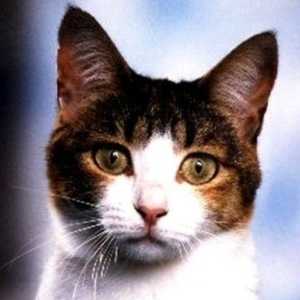
- Denominación:
- ANA
- Grupo:
- Shorthair
- Categoría:
- Básica
- Procedencia:
- Turkey
- Se aconseja:
- families with children; for active, energetic people; for those seeking a native breed with a unique personality; for living both in apartments and private homes.
The origin of the breed
The Anatolian cat is a native breed of Turkish cats. Like the Turkish Van, the Anatoli formed naturally around Lake Van. These animals were not, as previously thought, brought from Egypt, but have lived since ancient times in Eastern Anatolia, as well as in the warmer areas of the entire region – in the territories of modern-day Iran, Iraq, and the Caucasus, including Armenia and southern Russia, where they were domesticated by humans. Later, felinologists believe, these cats became feral again, and today's Anatoli inherit the "wild type" genotype of the domestic cat.
These cats were first presented at a show in 1995 in Germany, and at that time Anatolian cats began to be bred as a breed under the auspices of WCF. Other world felinological systems do not recognize the Anatolian cat, considering it a shorthair variety of the Turkish Van.
The Anatolian cat is most valued and loved in its homeland, Turkey, as well as in Germany, the Netherlands, and Greece. In Russia, this breed is not yet very common.
Appearance
A cat of medium to large size, with a medium body, well-developed musculature, and strong bone structure. Adult weight ranges from 4 to 7 kg. Sexual dimorphism is pronounced: males are larger than females. The Anatoli corresponds in type to the Turkish Van but is recognized in a broader palette of colors.
Standard — Point Scale (TOPCAT):
| Parameter | Points |
|---|---|
| Head (shape, muzzle & chin, profile) | 15 |
| Eyes | 15 |
| Ears | 10 |
| Body (size & boning, torso, neck, legs & paws) | 25 |
| Tail | 5 |
| Coat (length, texture, color) | 25 |
| Condition | 5 |
| Total | 100 |
Head (15 points):
- Shape (5 points): Broad blunt wedge shape with gentle contours, of medium length.
- Muzzle and chin (5 points): The muzzle is rounded, the chin firm.
- Profile (5 points): The profile is almost straight, with just a slight dip below eye level. The nose is medium long and straight.
Eyes (15 points): Large and oval, alert and expressive. Set at a slight slant. Eye color is even but has no relation to coat color. Odd-eyed individuals occur.
Ears (10 points): Moderately large, with a broad base and slightly rounded tips. They are straight set, rather high and upright on the skull.
Neck (5 points): Muscular.
Body (25 points):
- Size and boning (5 points): Medium to large in size with a muscular body and medium heavy bone structure.
- Torso (10 points): The chest is massive and solid, the ribcage rounded, the pelvic area solid.
- Legs and paws (10 points): The legs are of medium length, the paws are round.
Tail (5 points): Of medium length. Very mobile, well-furnished, but the hair length on the tail does not exceed 5 centimeters.
Coat (25 points):
- Length (5 points): Short all over the body.
- Texture (10 points): Without a woolly undercoat. It has a fine texture but is harsher to the touch ("crispy"). It has water-repellent properties, so Anatoli cats dry very quickly even in cold weather.
- Color (10 points): Colors not belonging to the original gene pool (chocolate, lilac, cinnamon, fawn, caramel, colorpoint, sepia, and mink colors, as well as their combinations with white) are not recognized. All other colors and patterns are recognized. Any amount of white is permitted.
Condition (5 points): Excellent physical condition, glossy coat, clean eyes and ears, good muscle tone.
Special Breed Faults
- Fine boning
Without Certificates
- Siamese, Persian, or British type
Disqualification
- Massive bone structure
- Tail defects
- Amputated claws
- Cryptorchidism
- Deafness
- Noticeable bone deformities
Personality and Character
The Anatoli is an active cat, playful and curious. It hardly ever meows: instead, it makes isolated vowel sounds reminiscent of bird chirping – for this reason, the breed is sometimes called "chirping cats." It is believed that the Anatolian cat can say "ma-ma" and nod its head to indicate to its owner the object of its interest.
- Water: Loves water, especially playing with streams of water.
- Play: Loves to play with a rustling small paper ball.
- Trainability: Willingly carries out simple requests from its owner.
- Expression: Has expressive facial expressions, can "frown" or "squint" its eyes.
- Music: Loves to listen to calm, melodic music, tapping its tail in rhythm with the melody.
- Jumping: Jumps very high; during play, it can jump up to 2 meters in height.
Care and Maintenance
Caring for this breed is simple.
- Coat: Regular brushing with a massage brush is sufficient. Thanks to the water-repellent properties of the coat, frequent bathing is not required.
- Bathing: As needed.
- Hygiene: Regular checking of ears, eyes, and nail trimming.
Nutrition
These cats are fed high-quality dry food. If a natural diet is preferred, chicken or beef meat, boiled fish, chicken giblets, boiled eggs, and dairy products are suitable. Anatoli cats have an excellent appetite but are not prone to overeating.
Health
Anatolian cats are distinguished by robust health, as they are a native breed that developed naturally. Life expectancy: 15–20 years.
Breeding
Permissible outcrosses (in the TOPCAT system):
- None (outcrossing with other breeds is not permitted)
Breeds Created Using Anatolian Cats
None identified to date.
Other and Obsolete Breed Names
- Turkish Shorthair
- Anatoli
Unofficial (Slang) Names
Anatoli. Anatolian. Chirping cat.